On July 2, 2025, the Public Service Commission of Wisconsin (PSCW) issued a Certificate of Public Convenience and Necessity granting We Energies approval to build a natural gas generating facility in the town of Paris. The PSCW approved the project to be built on County Line Road KR, just east of our existing Paris Generating Station.
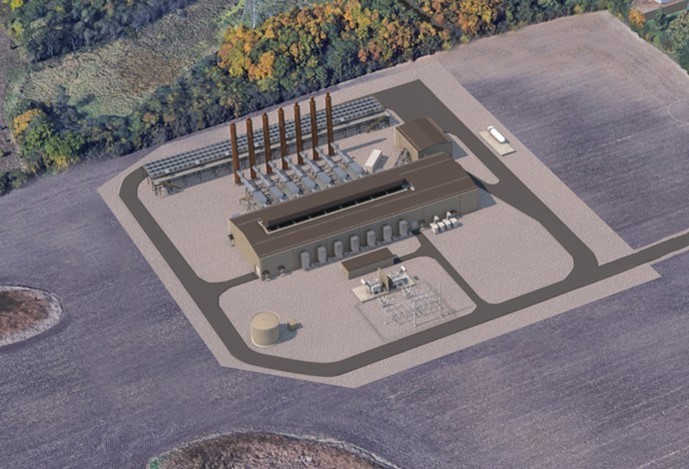
Artist’s rendering of Paris RICE site for illustrative purposes.
Proven Technology
The facilities use electric generators called reciprocating internal combustion engines (RICE). These modular engines run on natural gas and allow for extremely reliable and flexible operations. The Paris site will have seven RICE units with approximately 19 megawatts (MW) of capacity each. When operational, the plant will be capable of ramping to full load in less than 10 minutes and producing approximately 128 MW of energy — serving as a bridge to provide on-demand power during peak need or when renewable energy is not available.
Construction updates
Construction activities are underway and will continue through summer 2027.
Reassembly of the seven RICE units was finished Feb. 27. Each engine unit has four components: an engine block, air receiver, turbo charger and base. The RICE units were manufactured and tested at Wärtsilä’s facility in Vaasa, Finland, where each unit was assigned a number, and every piece of that unit marked with the number. The units were then disassembled and shipped, along with generators and adjacent components, to the Port of Duluth, in Minnesota. Everything arrived together on one ship after three weeks at sea, then was loaded onto trains for transport through Minnesota and Wisconsin.
The assembled units will be slid into the Engine Hall after it is constructed. Work is scheduled to begin in the fall of 2026 to construct an overhead electric tie-line connecting the RICE units to the grid.
June 10, 2026
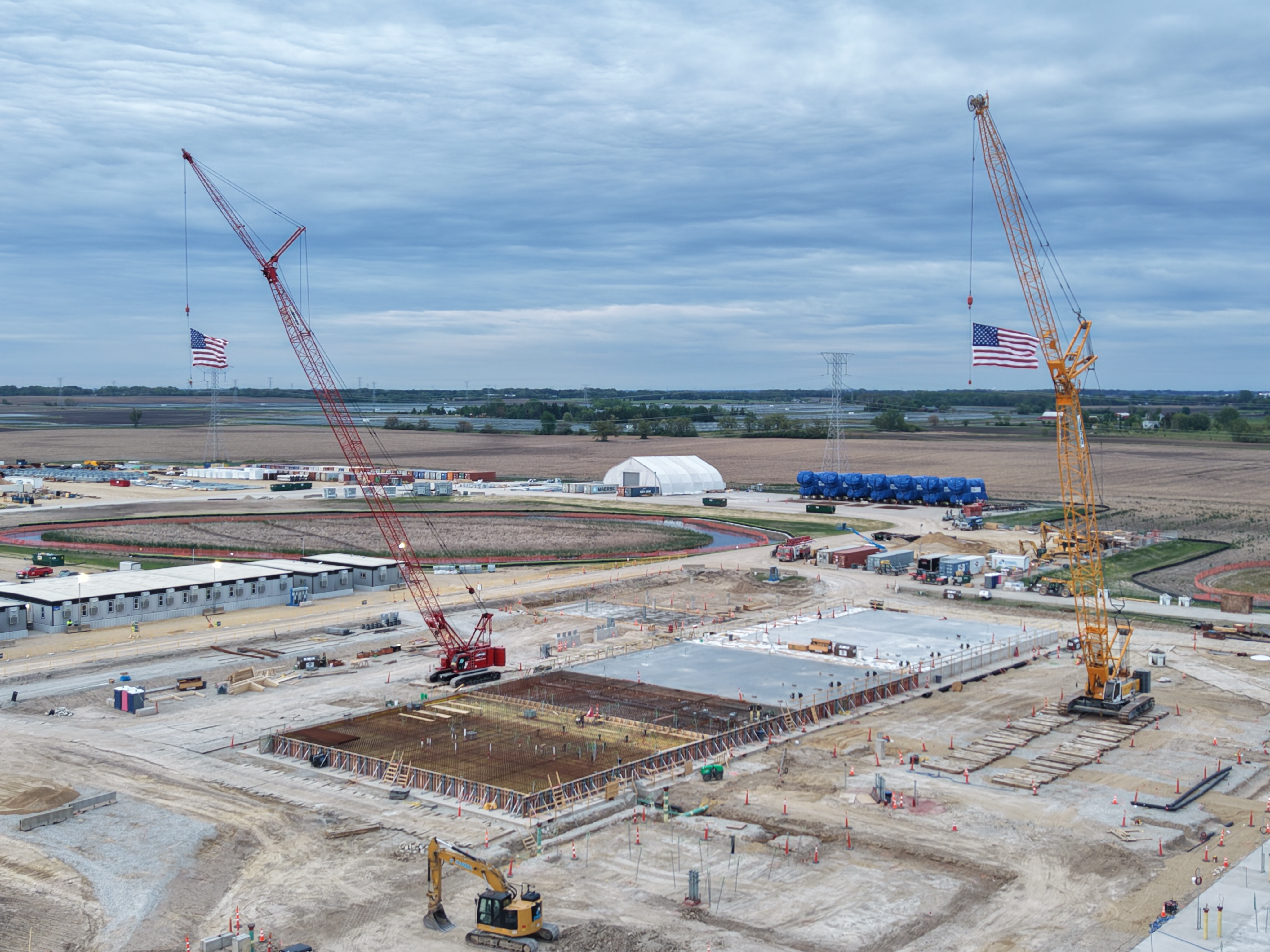
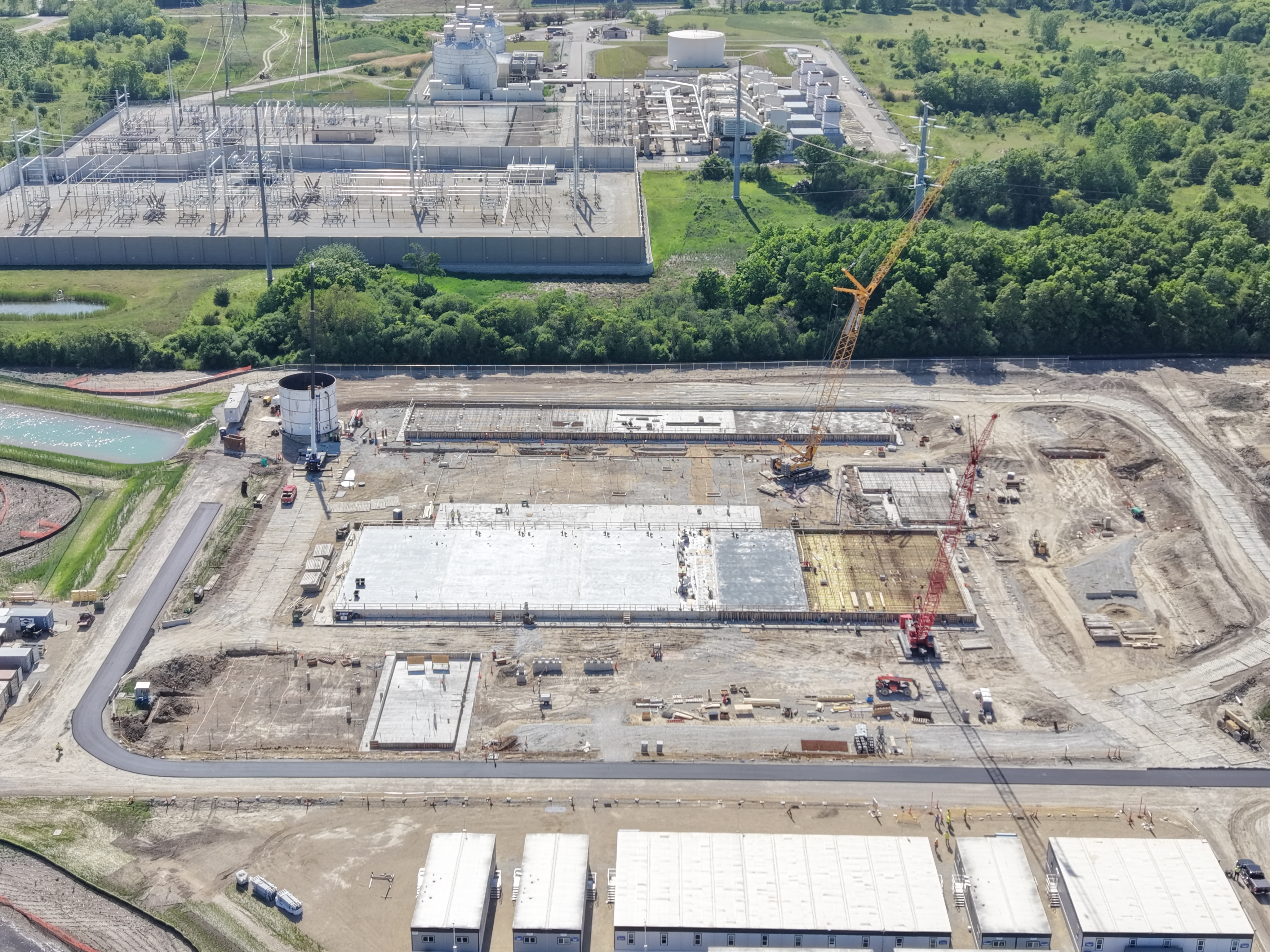
Aerial photos of construction show where the seven RICE units and support equipment will be installed.
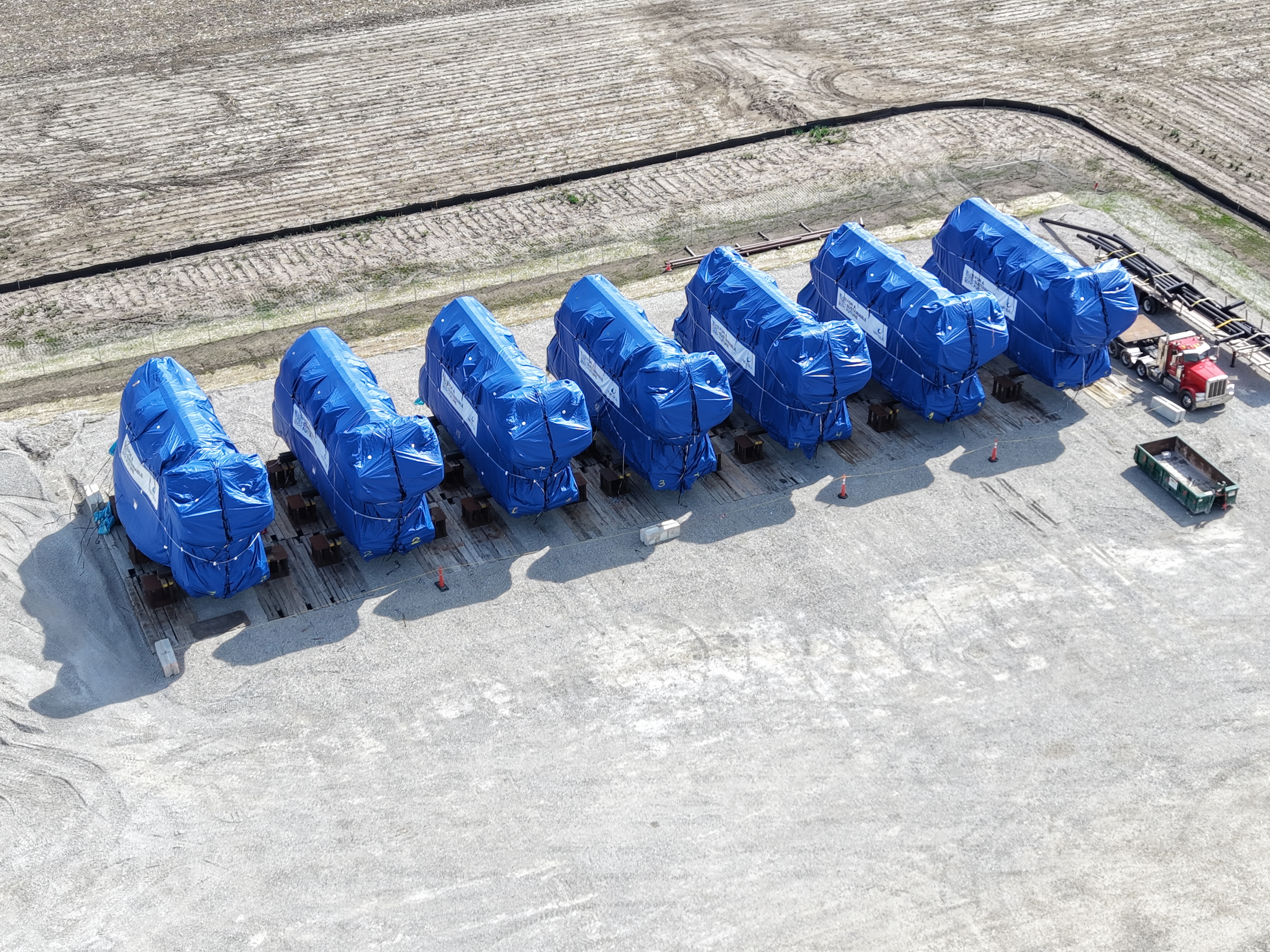
The units are staged on-site while the engine hall is constructed.
Feb. 27, 2026
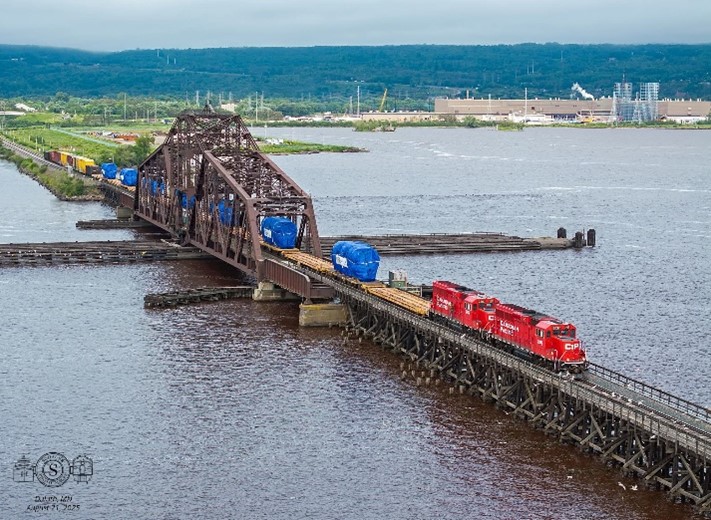
The RICE units were disassembled before shipping because the manufacturer knew they would need to travel nearly 500 miles by rail after being offloaded in Duluth.
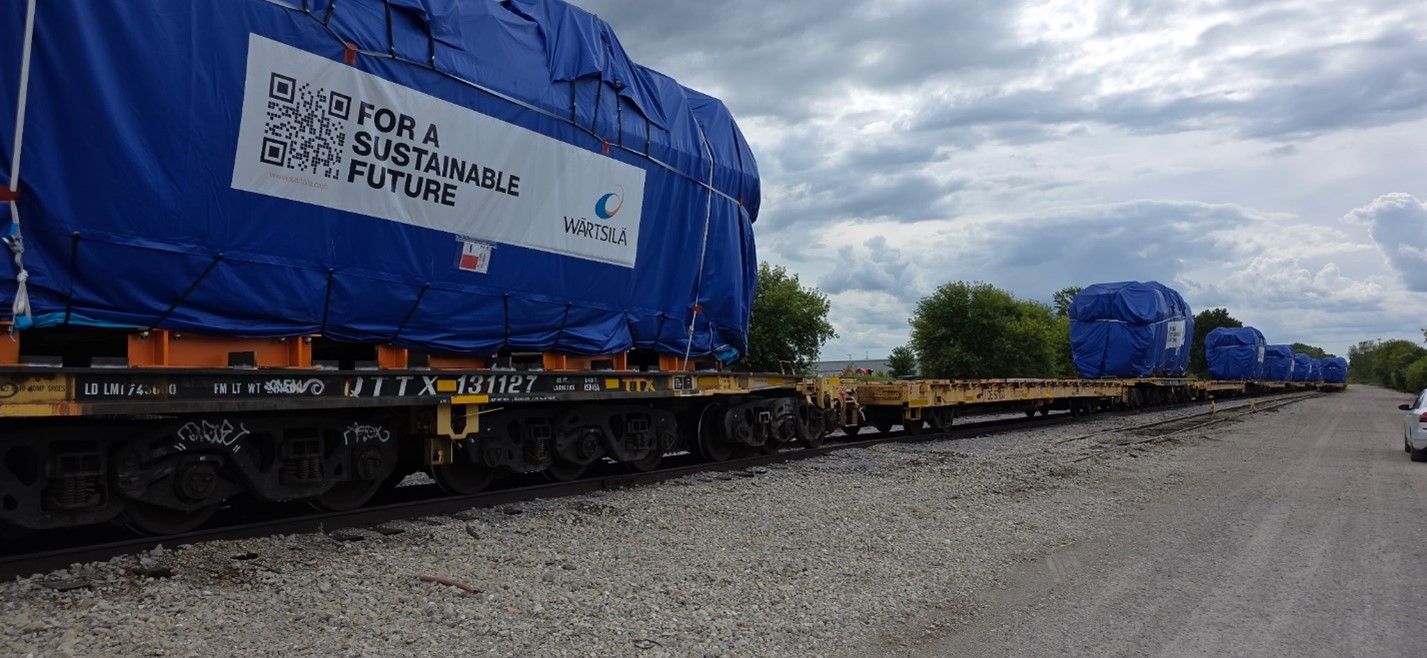
The engine blocks were stored in Sturtevant, Wisconsin, while awaiting the completion of a temporary storage area at the construction site.
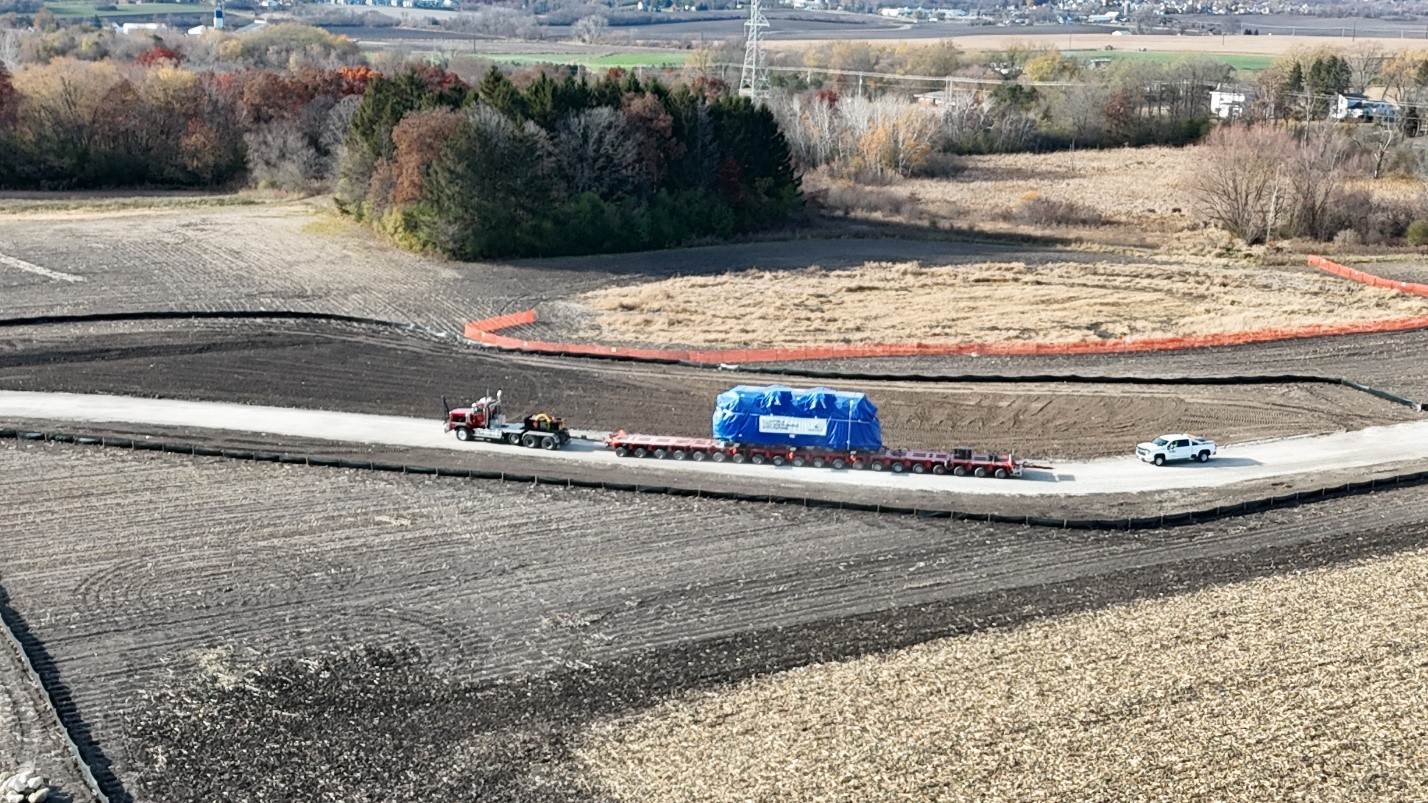
A specialized multiwheeled trailer brought the units the final 10 miles to the site in early November.
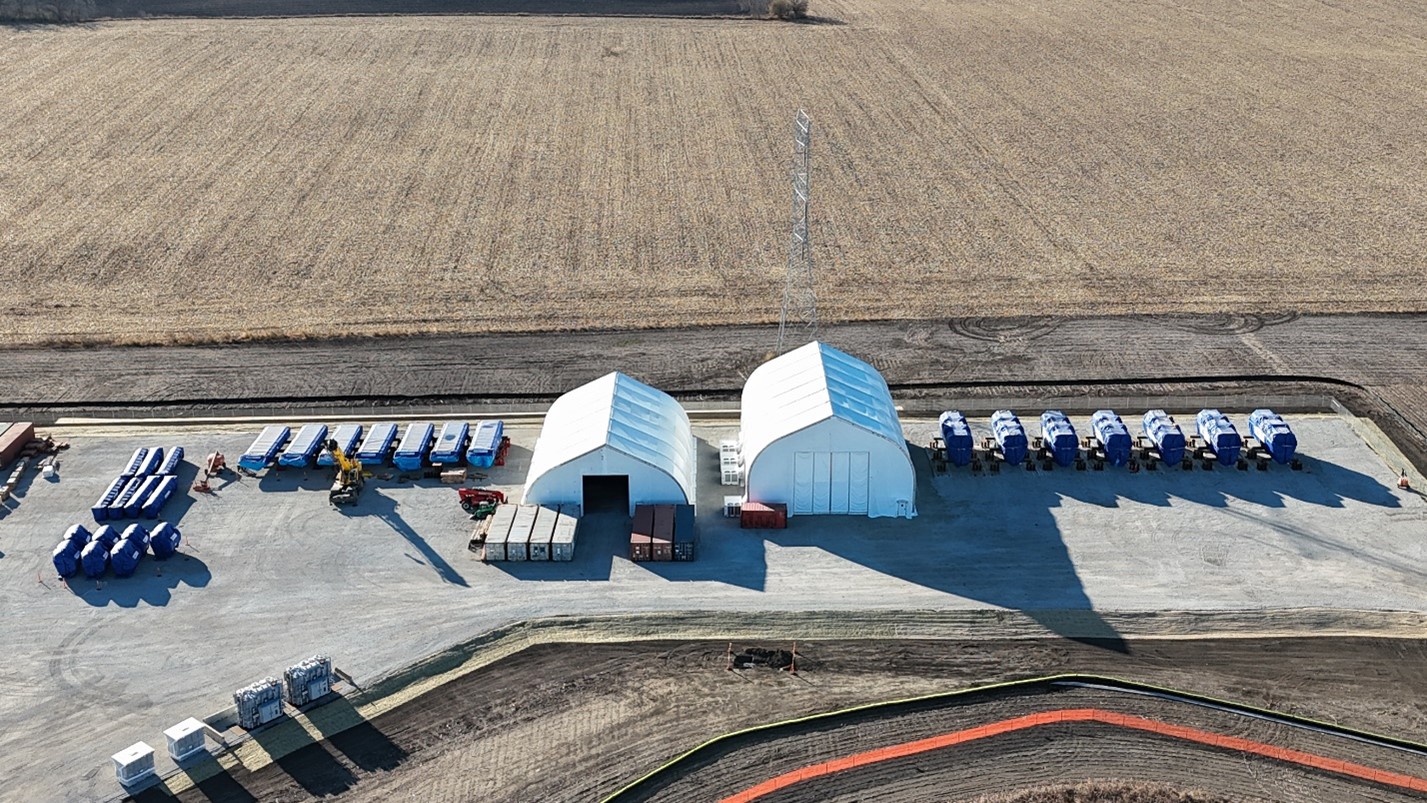
The engine blocks, air receivers, turbo chargers and bases were staged outside two 100-by-73-foot tents used for storage and reassembly.
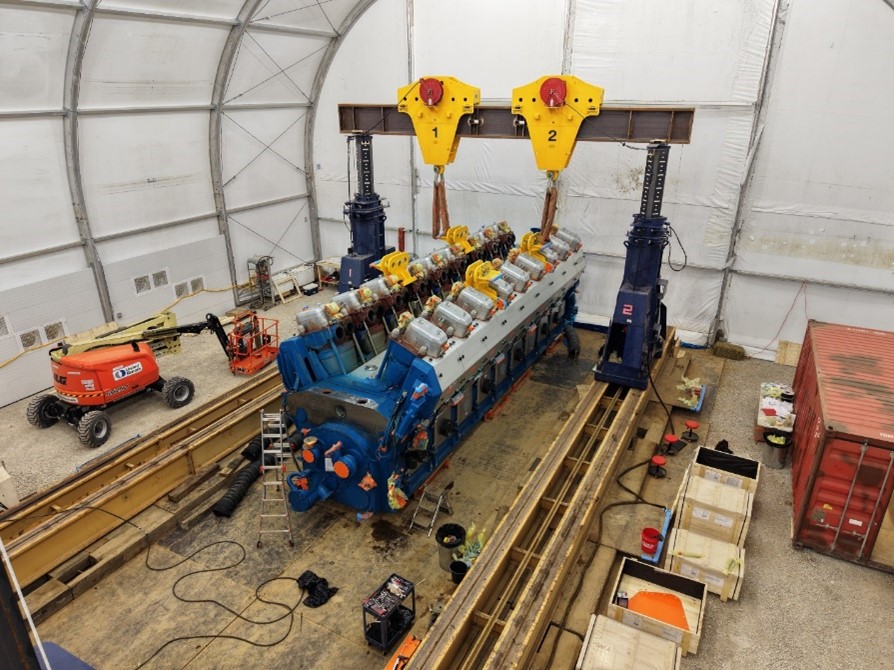
Inside the tent, the hydraulic gantry took over to move, lift and lower the four main parts of each unit. After each engine was fully reassembled, it was covered with a new fitted tarp and lifted back onto the Goldhofer trailer to be returned to the stands outside of the tent.
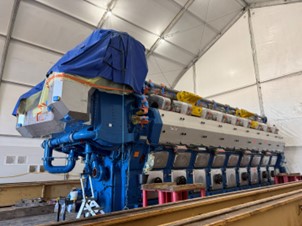
Each section was kept meticulously clean throughout the process. Numbers assigned to each unit and its parts allowed the engines to be reassembled exactly as they were built and tested in Finland.
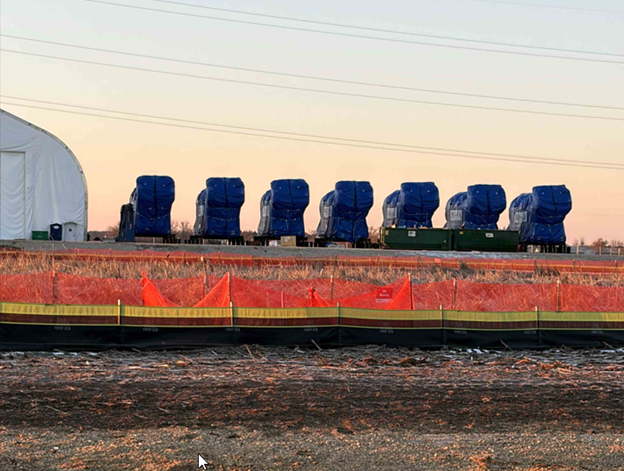
All seven engines were reassembled by the end of February. Now, the reassembled engines are staged on-site and covered with heavy tarps while the Engine Hall is constructed.
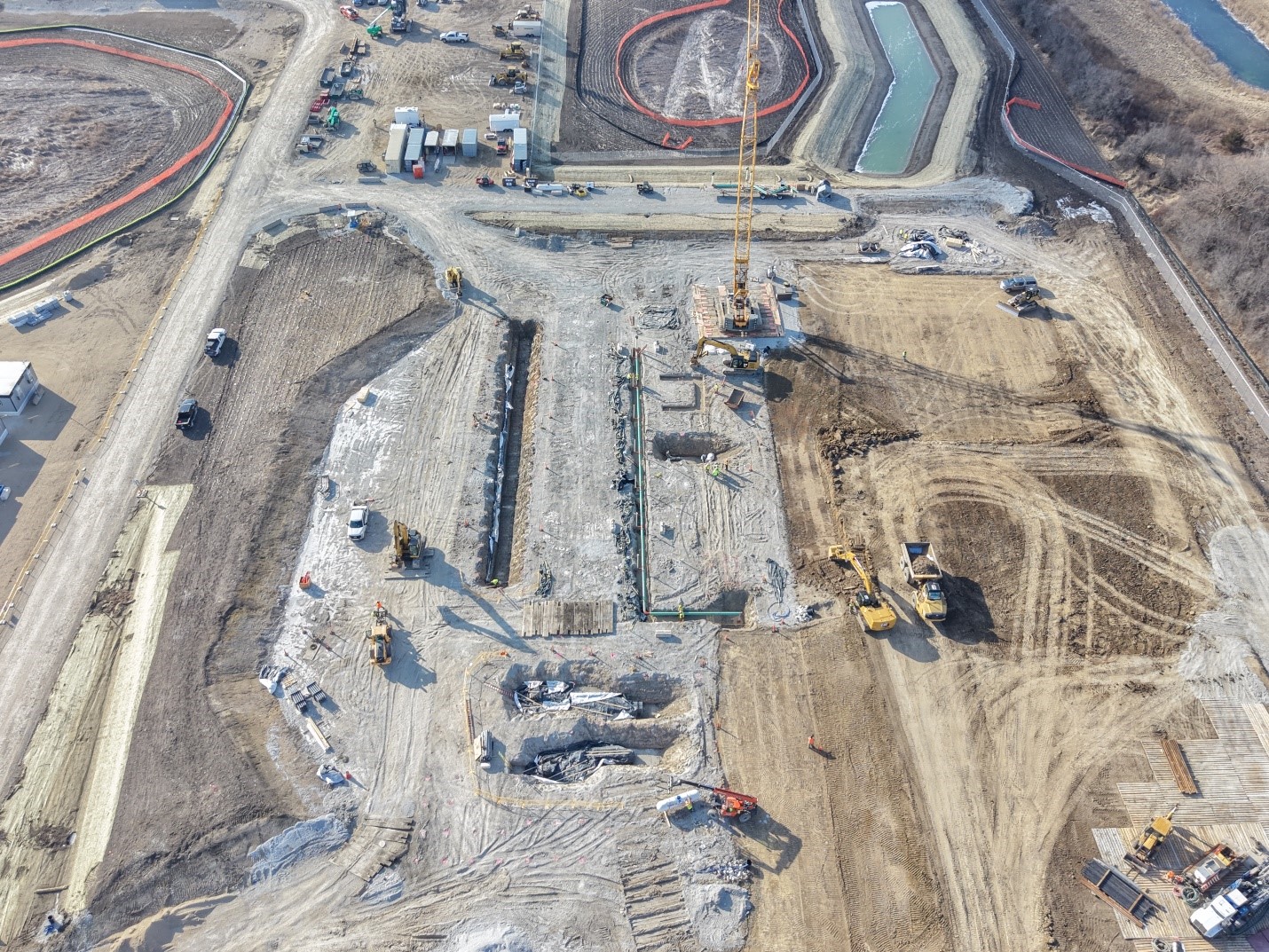
The Engine Hall’s footprint is established, and foundation construction is underway. The hall will be constructed of pre-cast concrete walls.