When power outages occur, we work as safely and quickly as possible to restore electricity.
How we restore service after storms
Power restoration video
Restoration sequence
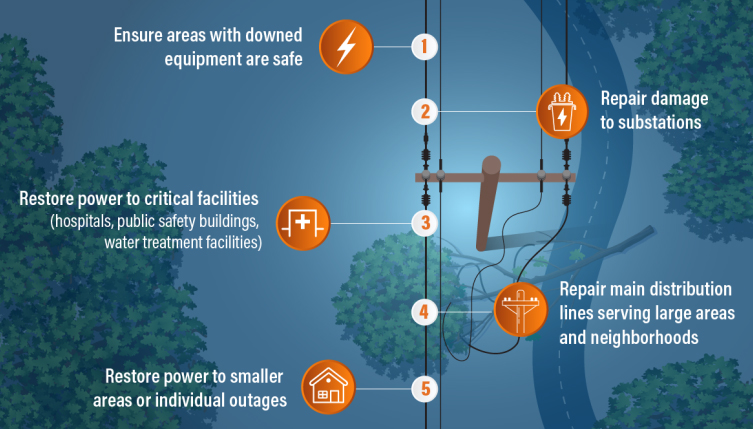
- Locate downed equipment to make the area safe.
- Repair damaged substations, which serve large numbers of customers.
- Restore service to hospitals as well as public safety, water treatment and other critical facilities.
- Repair main distribution lines serving large areas and neighborhoods.
- As the other steps are completed, we begin fixing outages in smaller areas and to individual homes and businesses.
Smart technology
New technology helps us keep your lights on — even when a storm or other incident knocks out power to an area.
Hundreds of smart switches monitor our electric grid 24 hours a day for signs of trouble. When an outage occurs, the switches can automatically isolate the affected section. In some cases, we can reroute power to restore your service before a crew is even dispatched.
Acoustic cameras are also used to scan equipment. The cameras use microphones to listen for hums or noises, which can indicate the start of a problem. This allows us to make repairs before an outage can occur.
Why power goes out
Unexpected outages
Power outages occur for many reasons. Here’s a breakdown of the most common causes:
- 40% Equipment.
- 6% Weather, including lightning, wind, rain, heat, cold, snow and ice.
- 30% Fallen trees and limbs, and tree growth into power lines.
- 11% Animal contact.
- 8% Human accidents, vandalism, etc.
- 5% Miscellaneous, including mechanical damage, construction errors, fires, etc.
Values exclude extraordinary storms, transmission-related outages and planned outages.
Planned outages
We sometimes interrupt service for maintenance work. We will inform you and your community in advance of such outages.
Momentary outages
In the context and purposes of reliability reporting, power outages of less than 5 minutes are considered momentary. Such outages are caused by wildlife, weather, trees, public, failed equipment, etc. that are present briefly and then either self-cleared and/or cleared by protective equipment.